On this page

Cloud hosting gets talked about constantly, often as if it is automatically the best option for everyone, but what does it actually mean for a South African business, and do you really need it? Behind the buzzword is a genuinely useful idea: instead of your website depending on a single server, it runs across a network of connected servers that share the load and cover for one another. That changes what is possible in terms of reliability and scale.
This guide explains cloud hosting in plain language, how it differs from shared and VPS hosting, the real benefits and trade-offs, and how to decide whether it is the right choice for your site. By the end you will be able to cut through the marketing and judge whether cloud hosting genuinely fits your needs or whether a simpler option serves you better.
📋 Key Takeaways

What is cloud hosting?
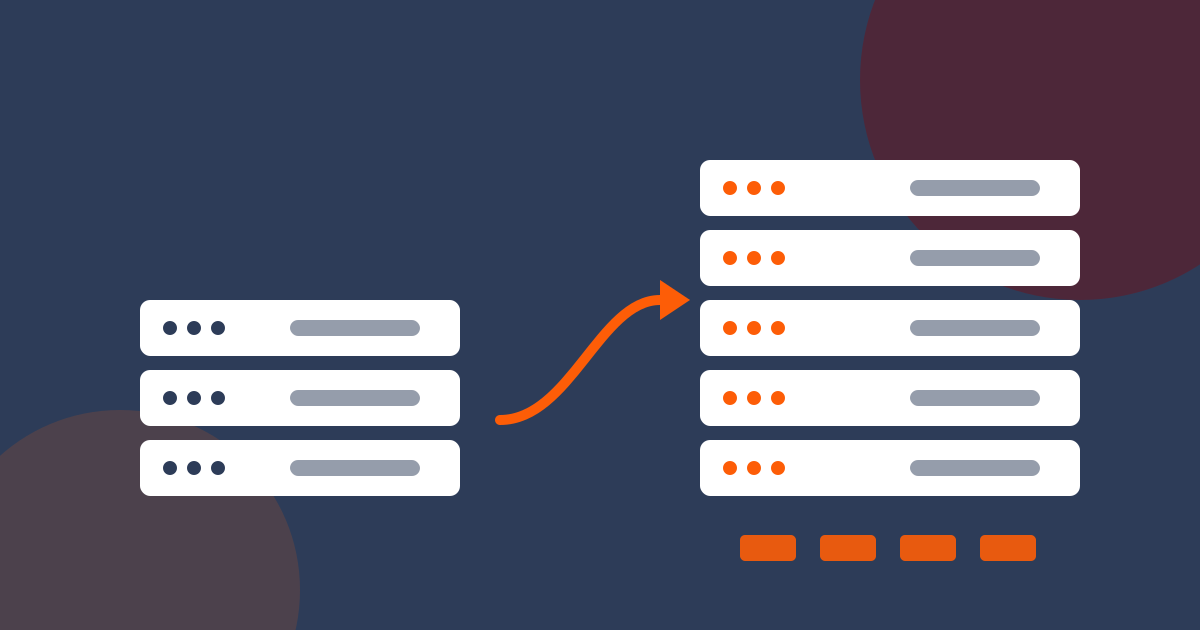
Cloud hosting spreads your website across a cluster of connected servers that work together as a single system, rather than placing it on one physical machine. If any one server in the cluster has a problem, the others pick up the load automatically, so your site keeps running. The same arrangement lets the system draw on extra resources when demand rises and release them when it falls.
Think of it as the difference between relying on a single generator and being connected to a whole power grid. A single machine is a single point of failure; a cluster is designed so that no one failure brings everything down. That resilience is the core appeal of cloud hosting, and what sets it apart from traditional single-server hosting.
How it differs from shared and VPS hosting
With shared hosting, your site sits on one server alongside many others, sharing its resources. A VPS gives you a guaranteed, ring-fenced slice of one server. Cloud hosting takes a different shape entirely by distributing your site across several servers, which is what gives it both its scalability and its resilience advantages over the other two.
None of these is simply better than the others, they suit different needs. Shared is the most affordable and simplest, a VPS offers more power and control, and cloud offers the most scalability and uptime. The right choice depends on your traffic and how critical constant availability is to your business, as our guide on types of web hosting explains.
The benefits of cloud hosting
The headline benefits flow from that distributed design. Because resources can scale on demand, your site copes gracefully with sudden surges instead of slowing down or crashing. Because the workload is spread across servers, a single hardware failure does not take you offline. And because you can often pay for what you actually use, you are not locked into paying for peak capacity all the time.
How cloud hosting handles traffic spikes
Traffic spikes are where cloud hosting really earns its keep. When a marketing campaign lands, a product goes viral, or a seasonal rush like Black Friday hits, the demand on your site can multiply in minutes. A single server can buckle under that load, but a cloud setup can bring additional resources online to absorb the surge, keeping pages fast when it matters most.
For businesses whose busiest moments are also their most valuable, that elasticity is a genuine competitive advantage. Losing your site during a sale is the most expensive kind of downtime there is, and cloud hosting is specifically designed to prevent it.
Reliability and uptime
Uptime is the other major draw. Because there is no single point of failure, a well-built cloud platform can keep your site available even when individual servers need maintenance or fail unexpectedly. For sites where downtime directly costs money, an online store or a booking system, that reliability can justify the cost on its own.
It is worth remembering that uptime still depends on the quality of the provider and their infrastructure, including local backup power, as we cover in our guide on load shedding and uptime. Cloud is a strong foundation, but the provider behind it still matters.
Scalability and cost
The flexibility of cloud hosting comes with pricing that can vary with usage, which is both a strength and something to watch. In quiet months you may pay less, but a sudden, sustained surge can raise your bill, so it is important to understand exactly how your provider charges before you commit. Predictable, capped pricing is available from some providers and can be worth seeking out.
For a business with steady, predictable traffic, this variability may be unnecessary complexity. For one with spiky or fast-growing traffic, the ability to scale is precisely the point. Match the billing model to how your traffic actually behaves.
Is cloud hosting right for you?
Cloud hosting makes the most sense if you run a growing store, expect seasonal surges, or genuinely cannot afford downtime. In those cases the resilience and scalability repay the extra cost and complexity. If you have a small brochure site with steady traffic, however, quality shared hosting is very likely all you need, and cloud would be paying for capability you will not use.
The honest answer for many South African small businesses is that they do not yet need cloud hosting, and that is fine. The smart move is to start with the right-sized plan and move to cloud if and when your traffic and reliability needs actually demand it.
📘 Good to Know: Do not choose cloud hosting just because it sounds advanced. Choose it because your traffic is spiky, growing fast, or your business cannot tolerate downtime. Otherwise a good shared or VPS plan is more cost-effective.
Quick recap
Frequently asked questions
What is the main advantage of cloud hosting?
Resilience and scalability. Because your site runs across several servers, it stays online if one fails and can scale up to handle traffic spikes, which a single-server plan cannot do as gracefully.
Is cloud hosting more expensive than shared hosting?
Usually yes, and the pricing can vary with usage. For small, steady sites that extra cost is often unnecessary, but for busy or spiky sites the scalability and uptime can be well worth it.
Do I need cloud hosting for a small business website?
Most small business sites do not. Quality shared hosting handles steady traffic well. Cloud becomes worthwhile when you have rapid growth, big traffic spikes, or cannot afford any downtime.
Common cloud hosting myths
Cloud hosting attracts a lot of marketing hype, and with it some misunderstandings worth clearing up. The first myth is that cloud is always faster than other hosting; in reality, speed depends on how the platform is configured and where the servers are, and a well-tuned VPS can match or beat a poorly set up cloud plan. The second myth is that cloud is automatically cheaper, when in fact usage-based pricing can cost more for a busy site if you do not watch your consumption.
The third common myth is that cloud hosting is hands-off and needs no management. While managed cloud plans handle much of the work for you, an unmanaged cloud setup still requires technical know-how to run safely. The honest takeaway is that cloud is a powerful tool for the right job, not a magic upgrade that makes every other consideration disappear.
Getting started with cloud hosting
If you have decided cloud hosting fits your needs, the smoothest path is a managed plan from a reputable local provider, so you get the resilience and scalability without taking on server administration yourself. Start by mapping your typical and peak traffic, so you can choose a plan whose scaling and pricing match how your site actually behaves through the month.
From there, treat the move like any hosting change: have the new environment set up and tested before switching your DNS, so there is no downtime. If you are unsure whether cloud or a simpler plan is right, a quick conversation with a local host will save you from over-buying capability you do not yet need.
Not sure which fits your site? email our team at info@webdesignhostingsa.co.za and we will recommend the right setup for your traffic and budget.
Web Design Hosting SA has hosted and built websites for South African businesses since 2009. Prices in our guides come from our live price list and are checked when a guide is updated. Spotted something out of date? Tell us.